3-Phase Wi-Fi Energy & Power Meter
Custom PCB and Embedded Firmware Development using ATM90E36A + ESP8266
Professional three-phase energy metering device combining custom PCB development with embedded firmware development, built around the ATM90E36A energy metering IC and the ESP8266 Wi-Fi module for real-time electrical data transmission.
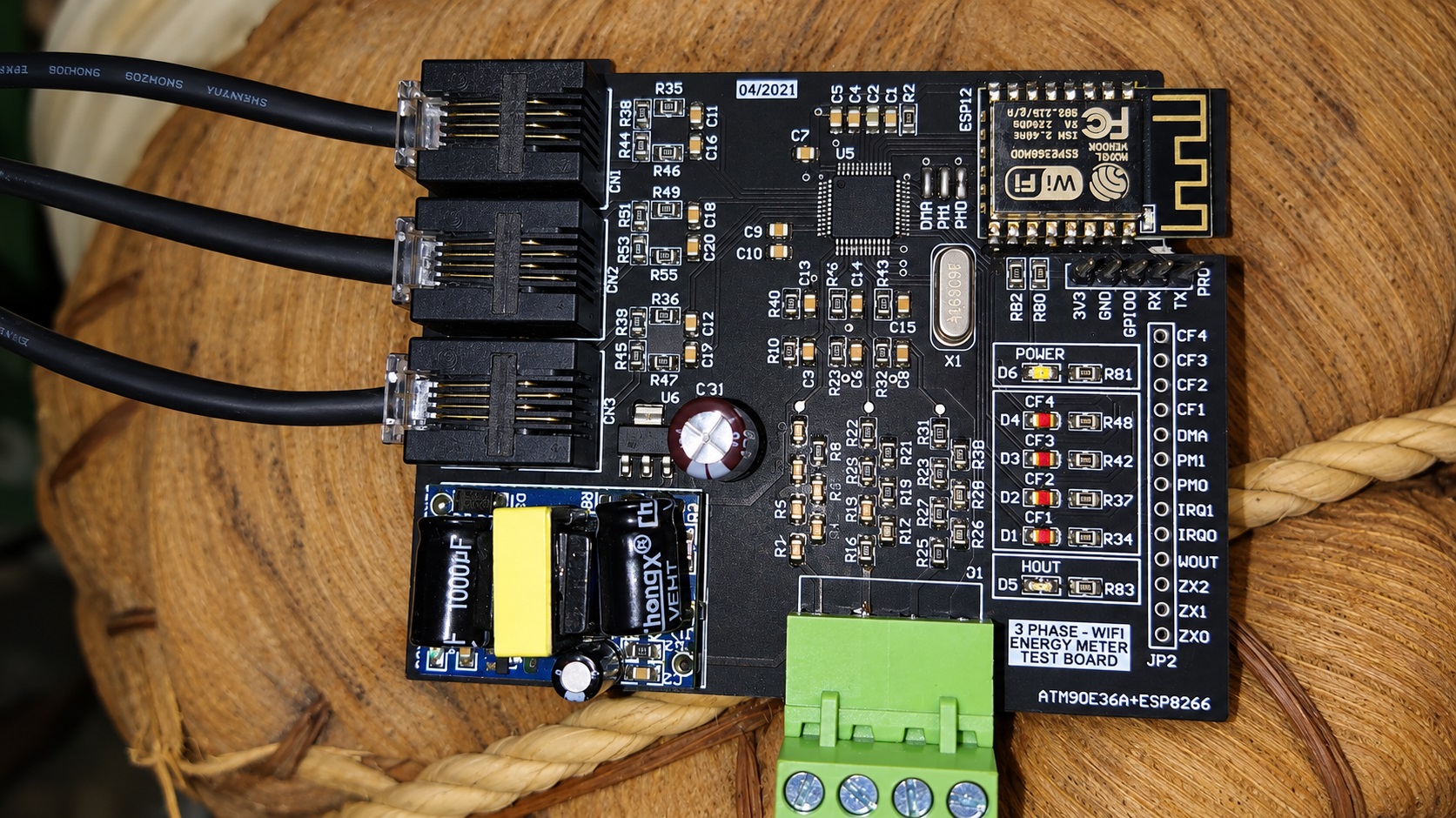
The 3-Phase Wi-Fi Energy & Power Meter is a custom three-phase energy metering device developed for professional use. The project combined custom hardware development with embedded firmware development to produce a compact device capable of measuring and transmitting real-time electrical data over Wi-Fi.
The hardware was designed around the ATM90E36A energy metering IC and the ESP8266 Wi-Fi module. The firmware implemented metering data acquisition, SPI communication, configuration, measurement processing, calibration and wireless data transmission.
I was responsible for the complete hardware and firmware development of the device.
- ▸PCB design
- ▸Component selection
- ▸Power supply design
- ▸Voltage and current measurement interfaces
- ▸Metering IC interfacing
- ▸ESP8266 integration
- ▸Programming and debug interfaces
- ▸Enclosure integration
- ▸ATM90E36A driver development
- ▸SPI communication
- ▸Register configuration
- ▸Measurement data acquisition
- ▸Data processing
- ▸Calibration implementation
- ▸Wi-Fi communication
- ▸Configuration handling
- ▸Device integration and debugging
- ▸Custom PCB
- ▸Power supply section
- ▸Voltage measurement circuitry
- ▸Current measurement circuitry
- ▸Three-phase electrical connections
- ▸ATM90E36A metering IC
- ▸ESP8266 Wi-Fi module
- ▸Programming and debug interfaces
- ▸Compact enclosure integration
// Component placement is not annotated on the photograph.
The metering IC provides the electrical measurements; the firmware reads them over SPI and converts the raw readings into engineering values. The groups below are the metering capabilities of the ATM90E36A as used by this device.
- ▸Active power
- ▸Reactive power
- ▸Apparent power
- ▸Active energy
- ▸Reactive energy
- ▸RMS voltage
- ▸RMS current
- ▸Power factor
- ▸Frequency
The metering IC performs the electrical measurements. The firmware configures the IC, reads its registers over SPI and converts the raw readings into engineering values.
Calibration allowed the measured values to be corrected against reference values so the reported measurements agree with reference instruments.
// Calibration is described conceptually — the implemented procedure and constants are proprietary and not published.
The device transmits measurement data over Wi-Fi so the electrical parameters can be monitored remotely. The implementation is kept general to protect proprietary details.
- ▸Hardware bring-up
- ▸Power supply verification
- ▸Voltage measurement verification
- ▸Current measurement verification
- ▸Energy measurement verification
- ▸SPI communication debugging
- ▸Wi-Fi connectivity debugging
- ▸Calibration testing
- ▸Long-duration stability testing
- ▸Enclosure integration testing
- 01Power supply designProviding a stable supply for the metering IC, the Wi-Fi module and the measurement circuitry from a three-phase supply.
- 02Voltage measurement interfacesConditioning the three phase voltages so the metering IC receives signals within its input range.
- 03Current measurement interfacesFeeding the current signals to the metering IC so the measured values track the actual load.
- 04SPI communicationGetting reliable register read and write access to the metering IC from the Wi-Fi module.
- 05Metering IC configurationSetting up the ATM90E36A correctly so the readings are meaningful and repeatable.
- 06Wi-Fi integrationKeeping the wireless link up and the measurement data flowing from the device.
- 07Measurement accuracy and calibrationGetting the measured values to agree with reference instruments across the operating range.
// Selected technical details have been generalized to protect proprietary product information.